
Solar Panel Maintenance NY: What Long Island Homeowners Should Know
One of the best things about going solar in Long Island is how little maintenance solar panels actually need. But low maintenance does not mean zero maintenance. Knowing what solar panel maintenance NY involves – and what to watch for – helps your system perform at its best for 25 years or more.
Studies show poorly maintained solar panels can lose 10% to 25% of their output. On Long Island, where PSEG rates average $0.25 per kWh, that means hundreds of dollars in lost savings every year.
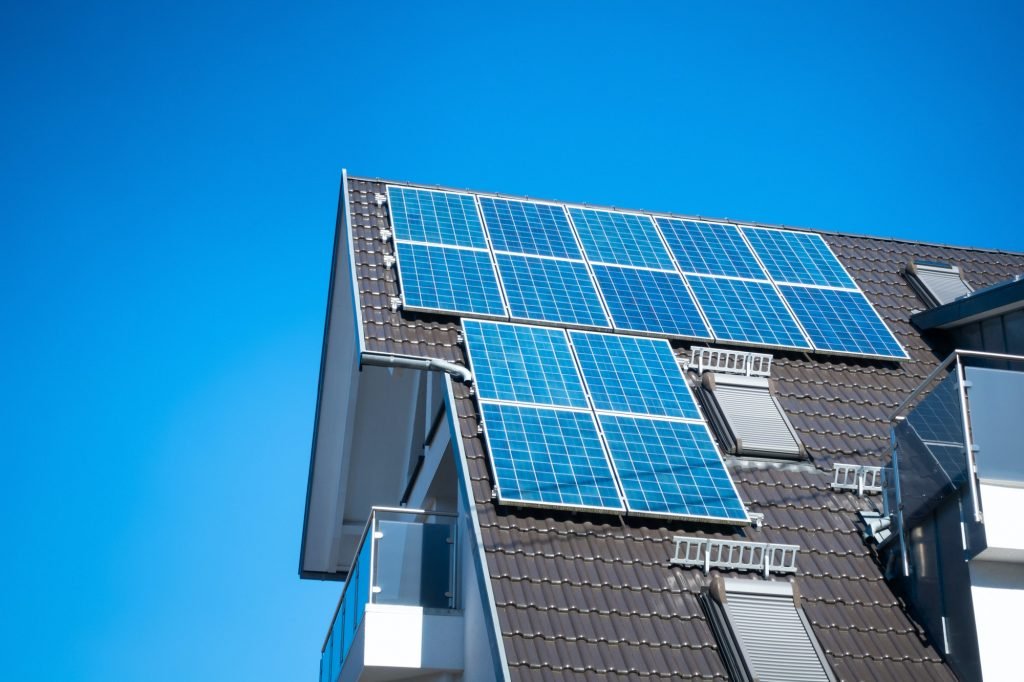
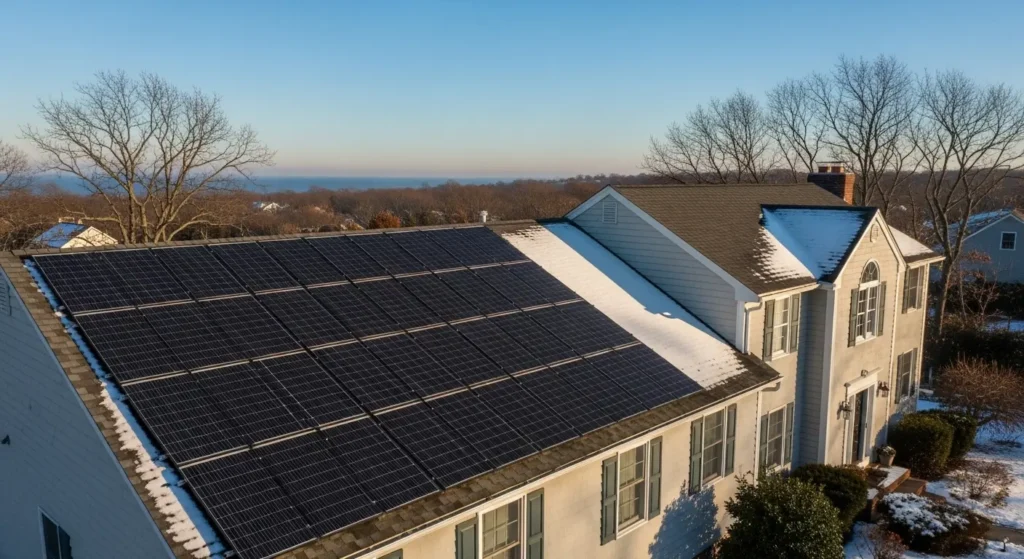
How Much Maintenance Do Solar Panels Need in NY?
Solar panels have no moving parts and are built to handle Long Island’s coastal winds, heavy snow, and salt air. Most systems need very little hands-on attention.
- Maintenance Task | Frequency | Cost
Visual inspection from ground | Monthly | Free
Monitor system output online | Weekly | Free
Solar panel cleaning | 1–2x per year | $0 – $300
Professional inspection | Every 2–3 years | $150 – $300
Inverter check | Annually | Free
Battery check (if applicable) | Annually | $100 – $200
Tip: Set up your monitoring app on day one. Checking your production takes two minutes and is the most effective maintenance habit you can build.
Solar Panel Cleaning in Long Island
Panels collect dust, pollen, bird droppings, salt residue, and tree debris – all of which reduce your energy output.
How Often Should You Clean?
Clean once or twice per year:
• Spring: After pollen season ends (May–June)
• Early Fall: Before low-sun winter months begin (September–October)
Warning: Never clean panels on a hot afternoon. Cold water on hot glass can cause micro-cracks. Always clean in the early morning or evening.
DIY Cleaning Steps
1. Use a soft brush or squeegee with a long handle
2. Rinse gently with a garden hose – never a pressure washer
3. Wipe in smooth strokes with a soft cloth
4. Rinse again with clean water
Tip: For steep or second-story roofs, hire a professional. SolarOpower offers panel cleaning across Nassau and Suffolk County.
Monitor Your System – The Most Important Habit
Your monitoring app shows exactly how much your system produces in real time. Check it regularly to catch issues early.
What to Watch | Warning Sign | Action
Daily production | 20%+ below normal | Check for shading or debris
Monthly output | Lower than same month last year | Call your installer
Inverter status | Red light or error code | Contact installer
PSEG credits | Lower than expected | Compare with app data
Systems with active monitoring catch issues 73 days earlier on average – saving thousands in lost production.
Seasonal Maintenance for Long Island Homes
Winter – Snow and Ice
Light snow slides off angled panels in 1 to 2 days – no action needed. For heavy snow lasting more than 2 days, use a soft foam snow rake. Never use metal tools or chip ice off panels.
Spring – Pollen
Pollen is the biggest seasonal issue on Long Island. A post-pollen cleaning (late May or June) is the single most impactful maintenance task of the year – it can recover 5% to 15% of lost output.
Summer -Salt Air and Birds
Coastal Long Island homes accumulate salt residue on panels. Mid-summer rinse recommended. Clean bird droppings promptly – even a small dropping causes localized shading across an entire string.
Fall – Leaves and Storm Prep
Clear heavy leaf buildup. Schedule a professional inspection in October or November before winter storms arrive.
Common Solar Problems – And What to Do
Problem | Cause | Action
Output 15%+ below normal | Dirt, shading, or fault | Clean panels; check app
Inverter red light or offline | Inverter fault | Call installer if lasts more than 1 day
Cracks or burn marks | Storm damage or defect | Call installer – likely under warranty
Specific panels producing less | Tree growth or shading | Contact installer to reoptimize
Bird droppings or nesting sounds | Birds under panels | Professional bird guard installation
PSEG credits dropping | System underperforming | Compare app data with PSEG bill
Concerned about your system performance?
SolarOpower provides professional inspections across Nassau and Suffolk County.
Call 516-502-7060 or visit solaropower.com
Your Solar Warranty Protection
Warranty Type | Coverage | Duration
Panel Performance | Output above 80% of rated capacity | 25 years
Panel Product | Manufacturing defects | 10–25 years
Inverter | Inverter failures | 10–12 years
Workmanship (SolarOpower) | Installation quality and roof penetrations | 10 years
Battery (if applicable) | Capacity above 70% | 10 years
Keep all warranty documents in a safe place. If an issue arises, your installer handles the warranty claim on your behalf.
Note: Choose an installer with a strong workmanship warranty. If they go out of business, manufacturer warranties remain valid – but roof penetration issues would need a new installer at your cost.
When to Call SolarOpower for Professional Maintenance
• Annual professional inspection – wiring, inverter, roof penetrations, panel condition
• After major storms – hurricanes, nor’easters, or hail events
• Persistent underperformance – cleaning does not resolve it
• Inverter replacement – inverters last 10 to 15 years
• Bird guard installation – birds nesting under panels is common on Long Island
Book Your Solar Inspection Today
SolarOpower – Long Island’s Trusted Solar Installer
Call: 516-502-7060 | Web: solaropower.com | New Hyde Park NY 11040
Frequently Asked Questions
Q: How often do solar panels need maintenance in Long Island?
A: Very little. Clean panels once or twice per year, check your monitoring app weekly, and schedule a professional inspection every two to three years. That is all most Long Island solar systems need.
Q: How do I clean my solar panels safely?
A: Use a soft brush or squeegee with a long handle and clean water. Rinse gently with a garden hose, wipe in smooth strokes, then rinse again. Never use a pressure washer or abrasive materials. Always clean in the early morning or evening when panels are cool.
Q: Do I need an inspection after a storm?
A: After minor storms, a ground-level visual check is enough. After major storms – hurricanes, nor’easters, or hail – a professional inspection is recommended. Check your monitoring app to confirm normal production after any storm.
Q: How do I know if my panels are underperforming?
A: Check your monitoring app. If production is consistently 15% or more below your expected output – after accounting for seasons – your system likely needs cleaning, inspection, or service.
Q: What happens to solar panels in winter on Long Island?
A: Light snow slides off within a day or two. For heavy snow lasting more than 2 days, use a soft foam snow rake. Never chip ice. Winter production is naturally lower – this is normal.
Q: Does SolarOpower offer maintenance services on Long Island?
A: Yes. We provide inspections, panel cleaning, inverter service, bird guard installation, and storm damage assessments across Nassau and Suffolk County. Call 516-502-7060 or visit solaropower.com.