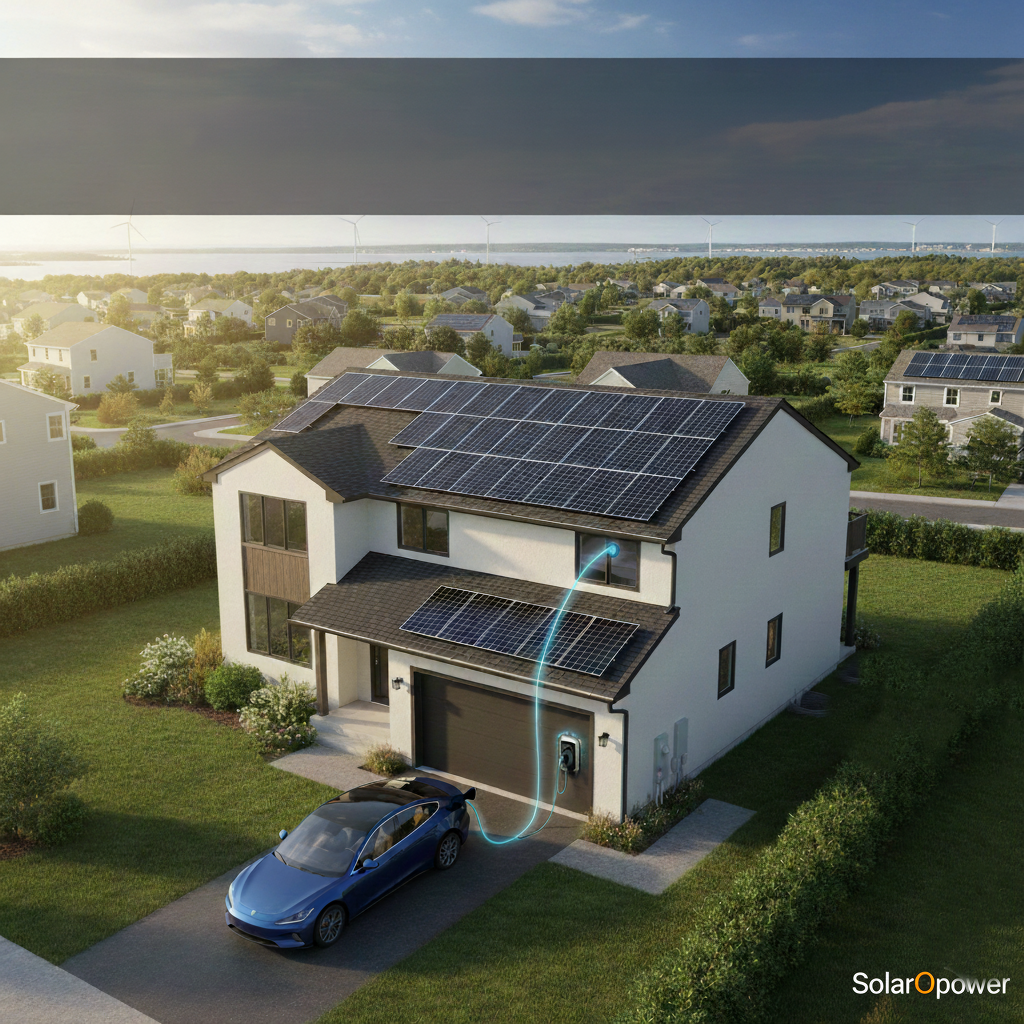
If you live in a planned community, townhouse development, or subdivision governed by a Homeowners Association (HOA), transitioning to clean renewable energy might seem tricky. Many residents worry that their association’s architectural guidelines will prevent them from going solar.
Understanding how HOA solar rules Long Island communities enforce interact with New York State solar rights is essential. The good news is that New York law strongly protects your right to generate clean energy, meaning your association cannot simply issue a blanket ban on solar systems.
Key Takeaways for Long Island Homeowners
- Can an HOA ban solar panels in New York? No. Under New York Real Property Law Section 342, blanket HOA solar bans are legally void and unenforceable.
- What can HOAs regulate? Aesthetic placement, flush mounting, painted conduits, and equipment screening, provided restrictions don’t increase costs by more than 10% or substantially impair efficiency.
- Standard Approval Timeline: Most architectural review boards complete the review within 14 to 30 days after receiving complete engineering plans.
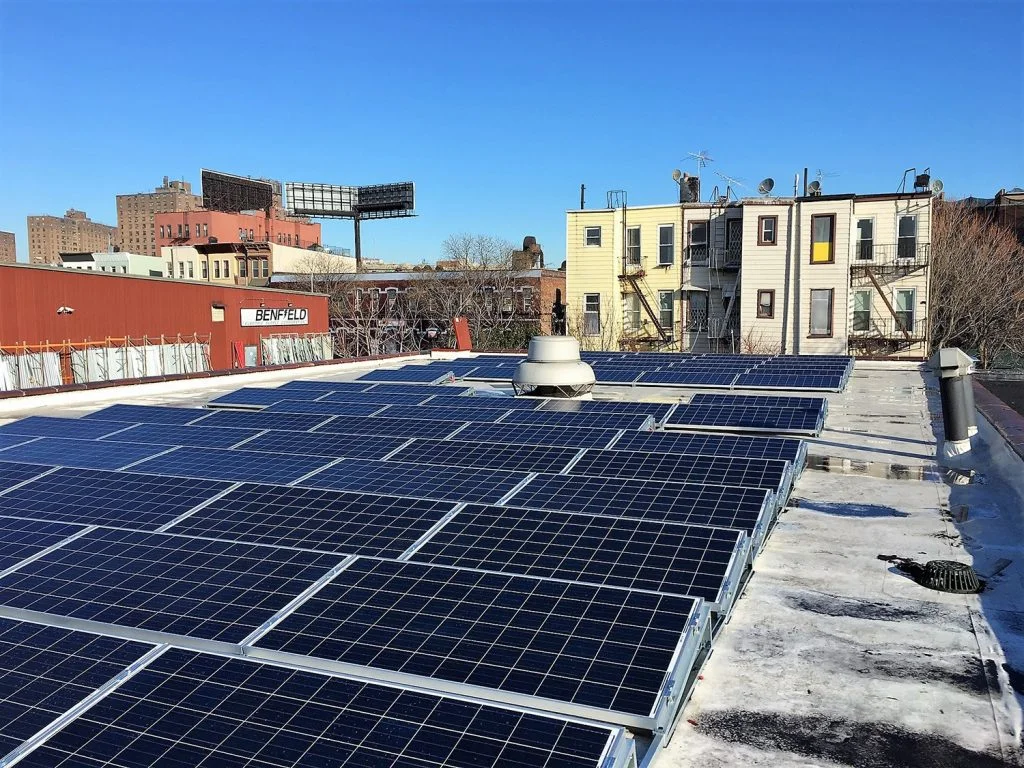
Can an HOA Deny Solar Panels in New York?
Under New York Real Property Law (RPP § 342 – Solar Rights Act), any covenant, restriction, or condition in an HOA by-law or deed that effectively prohibits or restricts the installation or use of a solar power system (up to 25 kW) is considered void and unenforceable.
This state-level solar access protection guarantees that Long Island homeowners have the legal right to lower their electricity bills and harness clean solar power on their private rooftops.
When reviewing HOA solar rules Long Island communities establish, state law always supersedes restrictive neighborhood covenants.
What HOA Solar Rules Long Island Communities Can Legally Regulate
While your HOA cannot ban solar panels entirely, New York law permits associations to implement reasonable aesthetic guidelines:
- Concealed Conduits & Wiring: HOAs can require external electrical conduits to be painted to match your home’s trim or siding.
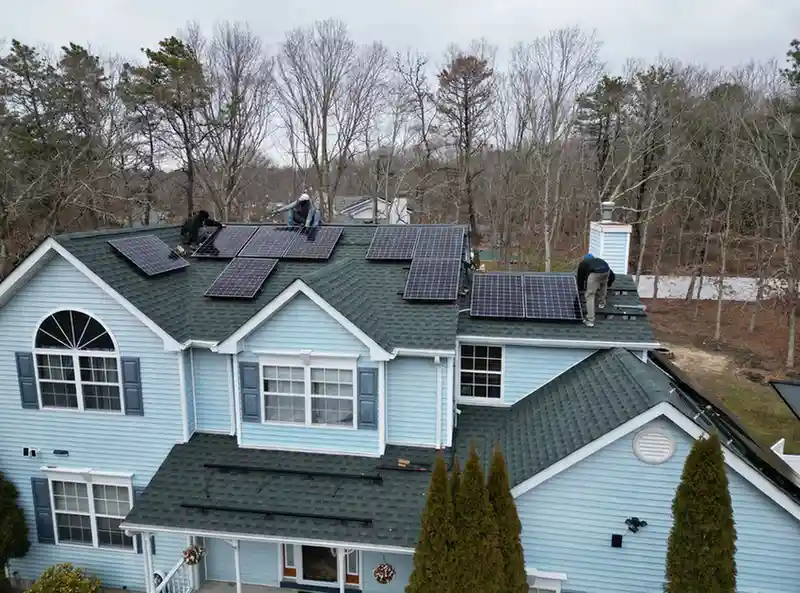
- Flush-Mount Placement: Panels must generally follow the slope and plane of the existing roof rather than using steep, raised tilt-brackets.
- Ground Equipment Screening: Inverters, disconnect switches, or battery storage units installed outdoors may need to be screened by approved shrubbery or fencing.
- Architectural Review Board (ARB) Applications: HOAs have the right to require formal plan submissions, contractor insurance proof, and engineering schematics prior to installation.
What Counts as an Unreasonable Solar Restriction Under NY Law?
Under NY Real Property Law § 342(2), a restriction is explicitly classified as unreasonable and legally void if it:
- Inhibits Maximum Efficiency: Forcing you to place panels on a heavily shaded or north-facing roof where sunlight exposure is inadequate.
- Increases Total Costs by >10%: Imposing design or structural demands that increase the installation or maintenance cost by more than 10% of the total system cost.
- Issues Unwritten Denials: NY law mandates that any HOA denial must be provided in writing with a detailed description of the exact basis and concerns.
How Long Island Homeowners Can Get Fast HOA Solar Approval
- Review Your HOA’s Covenants & By-Laws: Request a copy of your community’s Covenants, Conditions, and Restrictions (CC&Rs) to check for existing solar guidelines.
- Work with an Experienced Local Installer: Partner with a certified installer experienced with Nassau and Suffolk building departments and utility interconnection standards.
- Submit a Complete ARB Application Package: Include certified 3D roof layouts, manufacturer specification sheets, single-line electrical diagrams, and contractor licenses.
- Provide Production Data if Challenged: If the board asks for street-facing panels to be relocated, provide the irradiance analysis proving that alternate roof planes cause an unacceptable efficiency loss.
- Preparing your architectural review documents early ensures full compliance with specific HOA solar rules Long Island associations require.
Going Solar in an HOA Community with Solar O Power
Navigating neighborhood associations should never stand between you and energy independence. At Solar O Power, our team handles every step of the process-from custom engineering plans and HOA documentation packages to municipal permits and utility interconnection.
Contact SolarOPower today for a free custom solar design and expert HOA compliance assessment for your Long Island home!
Frequently Asked Questions
1.Do HOA solar rules Long Island neighborhoods enforce allow them to completely reject rooftop solar systems?
2. Can my HOA force me to move panels to the back of the roof?
3. What documents does an HOA require for solar approval?
4. How long does the HOA solar approval process take on Long Island?
At Solar O Power, we handle the entire HOA application, engineering diagrams, town permits, and installation from start to finish.
Read our complete HOA solar guide or contact SolarOPower today to schedule your free home solar assessment!