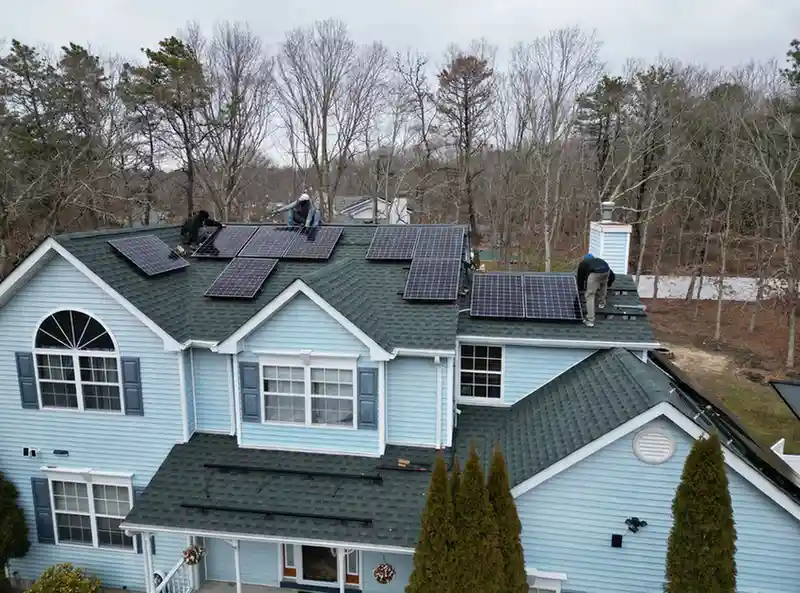
Installing solar panels increases the value of your home, but that added value doesn’t have to mean a higher property tax bill. Thanks to a solar property tax exemption Long Island homeowners can claim under New York State law, the increased assessed value from a solar installation is excluded from property tax calculations for 15 years.
Many homeowners are aware of the federal solar tax credit, but fewer know about this separate state-level benefit. In this guide, we explain how the solar property tax exemption Long Island residents qualify for works, who is eligible, and how to apply.
What Is the Solar Property Tax Exemption Long Island Homeowners Can Claim?
This benefit comes from New York Real Property Tax Law (RPTL) Section 487. Under this law, when you install a solar energy system, the added value that system brings to your home is not included in your property’s assessed value for tax purposes, for a period of 15 years from installation.
Importantly, this is not a reduction on your existing property taxes. It simply freezes your assessment at its pre-solar baseline, so your property tax bill doesn’t rise because of the solar system itself. The land and the rest of the home remain taxable as usual.
How the Solar Property Tax Exemption Works
RPTL Section 487 applies automatically across New York State unless a local municipality has formally opted out. This means most Long Island towns and villages honor the exemption by default, though it’s worth confirming with your local assessor since some jurisdictions may have opted out or adopted a PILOT (payment-in-lieu-of-taxes) agreement instead.
Eligible equipment includes solar panels, inverters, battery storage systems tied to a solar array, and other components necessary for collecting, converting, or storing solar energy. Standard building materials, such as ordinary insulation or roofing not specifically tied to the solar system, are not covered.
Who Qualifies for This Exemption?
Solar systems constructed between January 1, 1991, and January 1, 2030, are eligible. Homeowners on Long Island who install a qualifying residential solar system generally meet this requirement, since the exemption covers a wide window that includes both older and newly installed systems.
Battery energy storage systems installed as part of a solar setup are also eligible, provided they were constructed between January 1, 2018, and January 1, 2030.
How to Apply for the Solar Property Tax Exemption
Homeowners must take an active step to receive this exemption. It is not automatically applied. Here’s how the process generally works:
Complete Form RP-487, the official exemption application published by the New York State Department of Taxation and Finance
Submit two copies of the completed form to your local town or village assessor
File before your municipality’s taxable status date, which is March 1 in most Long Island communities
Wait for the assessor to review and approve the exemption
Once approved, the exemption typically carries forward automatically each year without needing to reapply, up to the full 15-year period
Does Every Long Island Town Offer This Exemption?
While RPTL Section 487 applies statewide by default, individual municipalities have the option to opt out through a local law, ordinance, or resolution. Because of this, it’s important for homeowners to check with their specific town or village assessor’s office to confirm whether the exemption is currently in effect in their jurisdiction.
If a municipality has opted out, it may still offer a PILOT agreement instead, particularly for larger solar installations, though residential homeowners are less commonly affected by this alternative.
How This Exemption Fits Into Your Overall Solar Savings
The solar property tax exemption Long Island homeowners can claim works alongside other incentives, including the federal solar tax credit and any applicable New York State rebates. Together, these programs are designed to reduce both the upfront cost of going solar and the long-term financial impact on homeowners.
Without this exemption, a solar installation that increases your home’s assessed value could result in a higher annual property tax bill, offsetting some of the electricity savings solar provides. With the exemption in place, homeowners can enjoy those energy savings without an added tax burden for 15 years.
Frequently Asked Questions About the Solar Property Tax Exemption Long Island Homeowners Ask
Does installing solar panels increase my property taxes on Long Island?
Is this exemption automatic once I install solar panels?
How long does the solar property tax exemption last?
What happens after the 15-year exemption period ends?
Can my town opt out of offering this exemption?
Does this exemption apply to battery storage systems too?
Final Thoughts: Don't Miss Out on This Tax Benefit
The solar property tax exemption Long Island homeowners can access is one of the most overlooked benefits of going solar. While it requires an application rather than happening automatically, the 15-year exemption can provide meaningful long-term savings by preventing a jump in your property tax bill.
Before or shortly after installing a solar system, check with your local assessor’s office to confirm your municipality’s status under RPTL Section 487, and be sure to file Form RP-487 before your area’s taxable status date. Combined with federal tax credits and other incentives, this exemption is a valuable part of the overall financial picture when switching to solar on Long Island.