How much power does a solar panel really lose every year? Most panels lose about 0.5% of their output annually, meaning a system that starts at 100% efficiency still produces around 85-88% of its original power after 25 years.
What Is Solar Panel Degradation?
Solar panel degradation is the gradual drop in a panel’s power output that happens naturally as it ages. Sunlight, heat, humidity, and daily temperature swings slowly wear down the materials inside a panel. This is not a defect. Every solar panel ever made degrades over time, the same way a car battery loses capacity after years of use.
For Long Island homeowners, this matters because it affects long-term savings estimates. A solar company’s 25-year production forecast is only accurate if the degradation rate is calculated correctly.
Average Degradation Rate: What the Numbers Show
Most modern solar panels degrade at a rate of 0.3% to 0.8% per year, with 0.5% being the industry standard used in most manufacturer warranties. Older panels, made before 2010, often had higher degradation rates closer to 1% per year. According to the National Renewable Energy Laboratory, median degradation rates for crystalline silicon panels have improved significantly as manufacturing quality has advanced over the past decade .
Here is what that looks like over time for a typical panel starting at 100% output:
Degradation Timeline for a Standard Panel
Year 1: 97.5% to 98% output Year 5: 93% to 96% output Year 10: 90% to 93% output Year 15: 87% to 91% output Year 20: 85% to 89% output Year 25: 82% to 87% output
| Panel Type | Average Yearly Degradation | Output at Year 25 |
|---|---|---|
| Standard Polycrystalline | 0.7% to 0.8% | Around 80% |
| Standard Monocrystalline | 0.5% to 0.6% | Around 85% |
| Premium Monocrystalline (PERC) | 0.3% to 0.4% | Around 90% |
| Bifacial Panels | 0.3% or lower | 90% or higher |
Ask your installer for the panel’s specific degradation rate in the spec sheet, not just the general warranty number. Some manufacturers list a higher first-year drop (called LID, or light-induced degradation) followed by a slower rate afterward.
Why Panels Lose Power Over Time
A few factors drive solar panel degradation on Long Island homes specifically:
Heat cycling: Long Island summers push panel surface temperatures well above 100 degrees Fahrenheit, then nighttime cooling causes materials to expand and contract daily. This repeated stress slowly affects the cell structure.
Humidity and salt air: Homes closer to the coast face added exposure to moisture and salt, which can accelerate corrosion on panel frames and connectors over the years.
UV exposure: Constant sun exposure breaks down the protective layers on the panel surface over time.
Microcracks: Small cracks can form in the silicon cells from hail, heavy snow load, or even the installation process itself, leading to faster localized degradation. This is one reason working with an experienced local installer matters – you can read more about what a proper setup looks like in our guide on the Solar Panel Installation Process in Long Island.
Degradation vs Panel Failure: What Is the Difference?
Degradation and failure are often confused, but they are not the same thing. Degradation is a slow, predictable decline in output that happens to every panel, every year, regardless of quality. Failure is a sudden or unexpected drop in performance caused by a defect, physical damage, or a manufacturing flaw.
A panel producing 88% of its original output after 20 years is degrading normally. A panel that suddenly drops to 40% output within a few months is likely experiencing a failure, not degradation, and should be inspected under warranty. Knowing the difference helps homeowners avoid unnecessary panel replacements while also catching real problems early.
How Degradation Affects Your Savings Over 25 Years
Even with expected degradation, solar panels remain productive for decades. A system that saves $2,000 per year on electricity bills in year one might save closer to $1,700 to $1,800 per year by year 25, once natural degradation is factored in. Over the full lifespan, the cumulative savings still far outweigh the drop in output.
This is one reason installers on Long Island calculate ROI over a 20 to 25 year window rather than looking at year-one production alone. For a full breakdown of how long it typically takes to recover your investment, see our guide on Solar Payback Period Long Island.
How to Slow Down Solar Panel Degradation
Homeowners cannot stop degradation completely, but a few steps help slow it down:
Keep panels clean. Dirt, pollen, and salt residue buildup can create hot spots that speed up wear on certain cells.
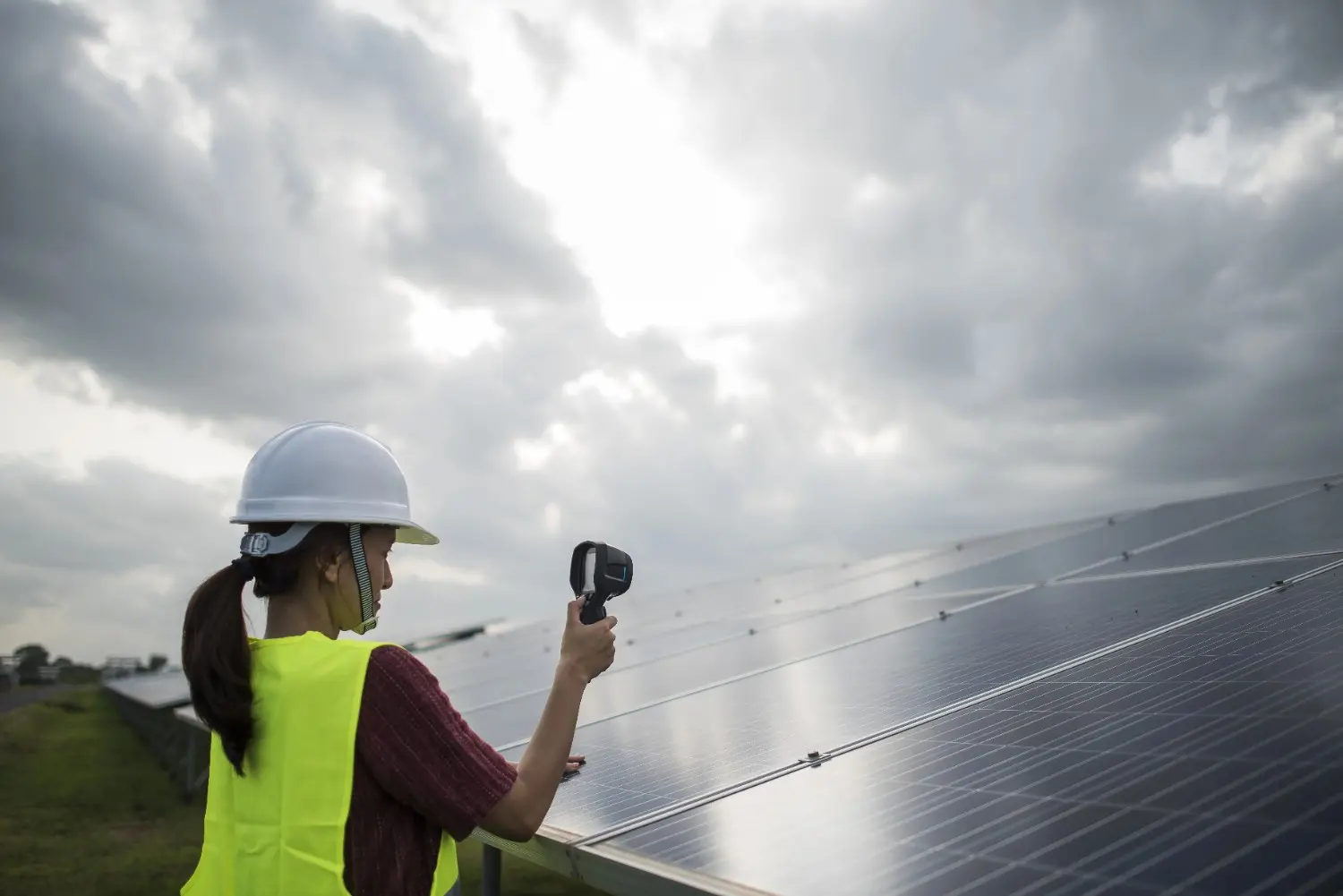
Schedule annual inspections. Catching microcracks or loose connections early prevents faster degradation in those spots.
Choose panels with a strong performance warranty. Look for warranties guaranteeing at least 85% output at year 25, which is standard among top-tier manufacturers. Our article on [Solar Panel Warranty: What’s Covered and What’s Not] breaks down what these warranties typically include.
Avoid unnecessary roof work near panels. Vibration and foot traffic near the array during unrelated roof repairs can stress panel connections.
Degradation Warranties: What to Look For
Most manufacturers offer a performance warranty separate from the standard product warranty. This performance warranty guarantees a minimum output percentage at specific years, commonly:
Year 10: at least 90% output guaranteed
Year 25: at least 83% to 87% output guaranteed
When comparing solar quotes on Long Island, this performance warranty number matters as much as the price per watt, since it directly affects your long-term energy production and ties directly into your overall factors affecting solar savings in Long Island.
Frequently Asked Questions
Does solar panel degradation mean my panels will stop working?
Can extreme weather increase degradation?
Is degradation covered under warranty?
Do all panel brands degrade at the same rate?
Final Thoughts
Solar panel degradation is a normal, predictable part of owning a solar system, not a warning sign. With average degradation rates under 1% per year, Long Island homeowners can expect strong power output for 25 years or more. Choosing quality panels with solid performance warranties, plus regular maintenance, makes the biggest difference in keeping systems efficient over the long run.