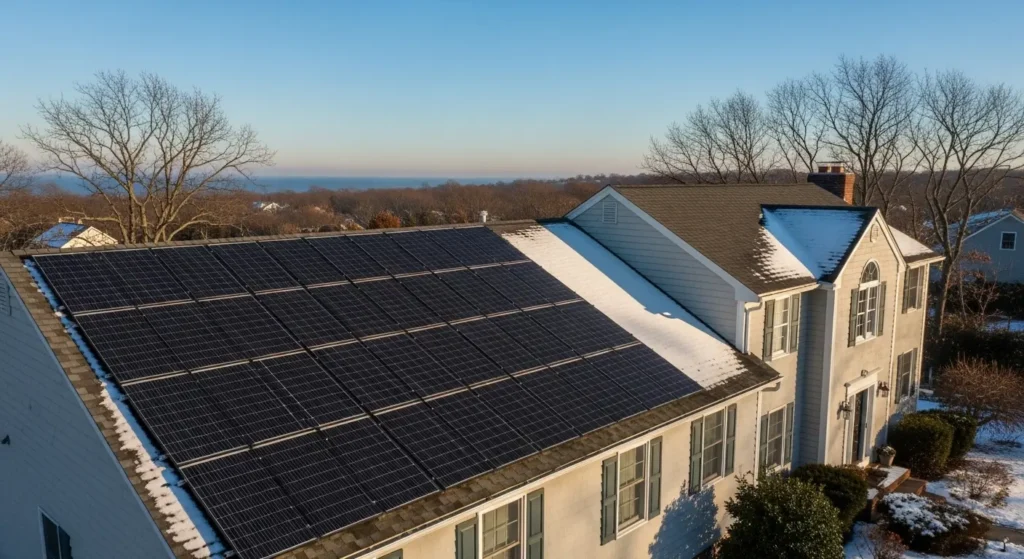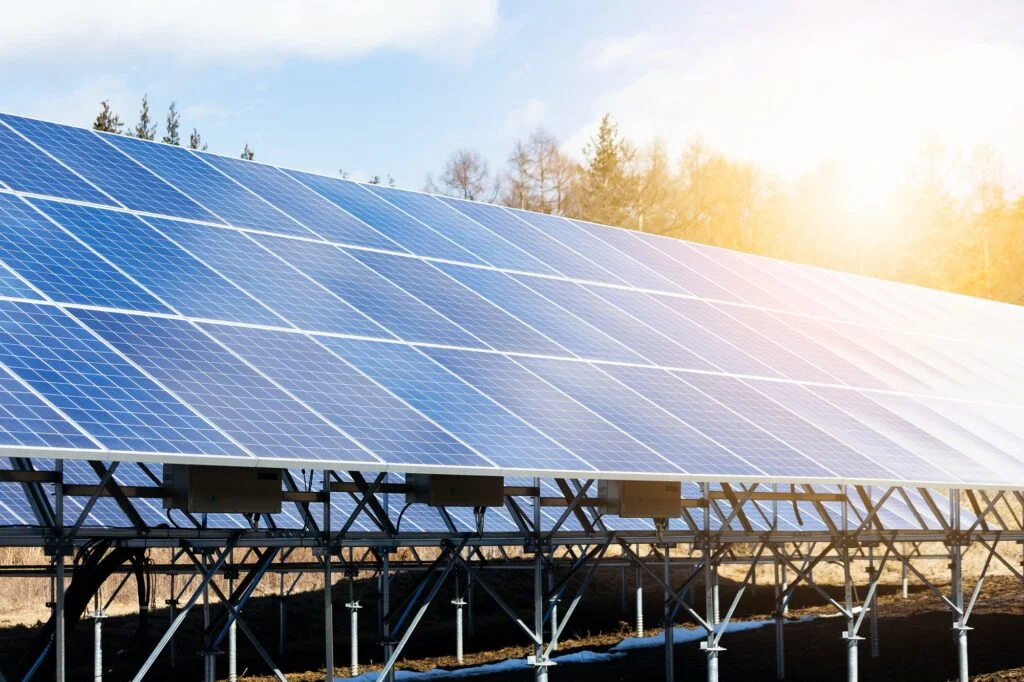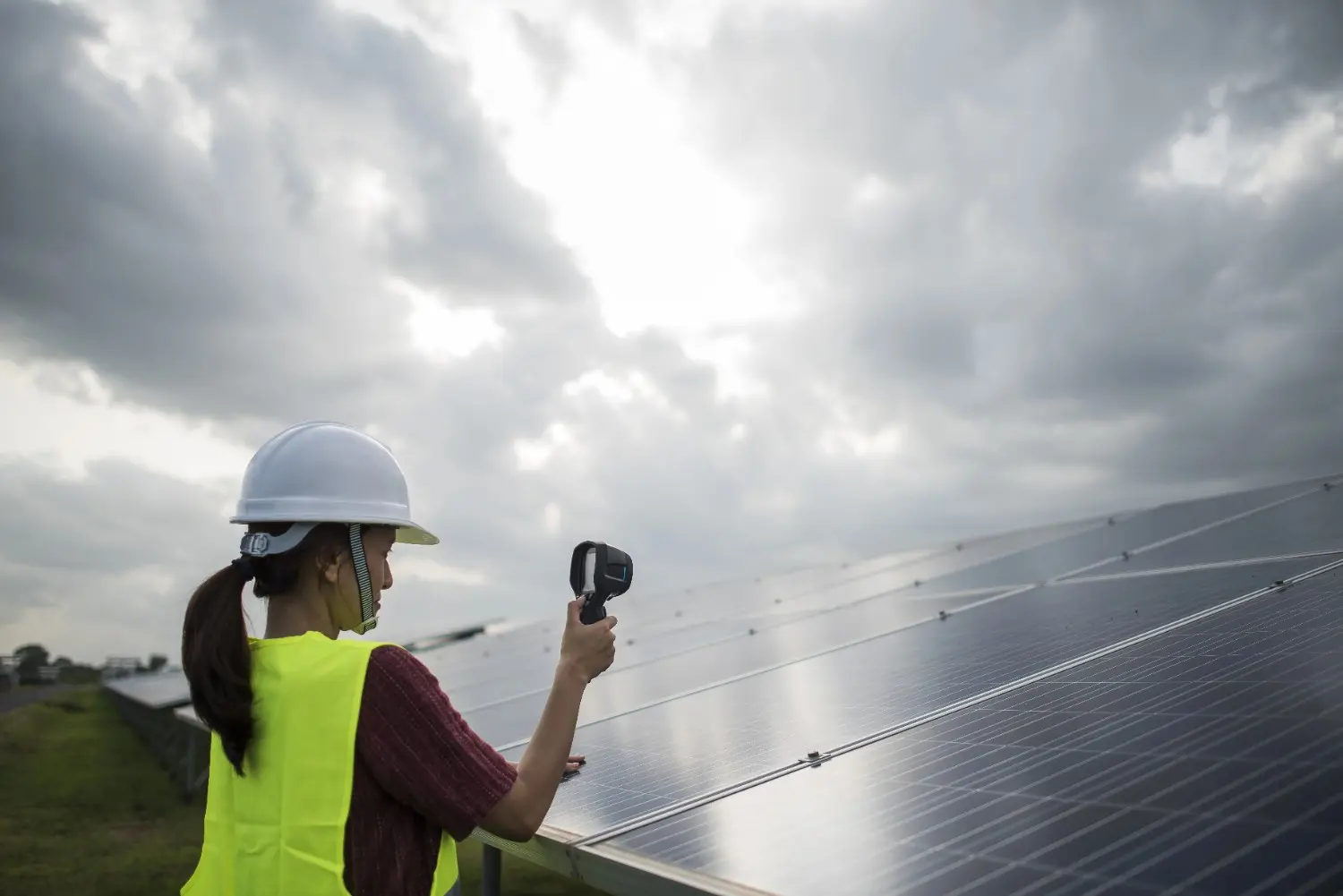
If your solar panels not producing power Long Island, you’re not alone – this is one of the calls we get most often.
You check your app one morning and the numbers just don’t look right. Production’s down, and nothing on your end has changed. If that sounds familiar, you’re not the only Long Island homeowner dealing with it – this is one of the calls we get most often.
Quick answer: the usual suspects are dirty panels, new shade from a growing tree, an inverter acting up, a loose wiring connection, or just the time of year catching up with you. Most of these you can rule out yourself in a few minutes before picking up the phone.
Here’s what to look for, starting with the easiest checks first.
Start With the Obvious: Dirt and Pollen
It sounds too simple, but this is the number one culprit we run into. Living near the coast means salt in the air, and every spring brings a wave of pollen thick enough to leave a visible film on anything left outside – including your panels.
Take a look from the ground on a clear day. If the panels look dull or streaky instead of shiny, that’s your answer. And here’s the part people don’t expect: rain doesn’t always fix it. Sometimes it just spreads the grime around and leaves streaks that block even more light than before.
A homeowner in Massapequa called us last spring convinced her inverter had failed – production had dropped nearly 20% over a few weeks with no clear reason. Turned out to be a season’s worth of pollen sitting on the array. A simple rinse and soft-brush clean brought output right back.
Check for New Shade
Trees don’t stay the same size. That maple near the edge of your roof that wasn’t a problem three summers ago might now be tall enough to throw shade across part of your array for a couple of hours each afternoon.
The tricky part: even one shaded panel can drag down output for a whole string of panels, depending on how your system’s wired. So a little shade goes a long way.
Watch your roofline between about 10 a.m. and 2 p.m. – peak sun hours – for a few days. Any new shadows creeping onto the panels are worth a call to a tree service.
Rule Out an Inverter Problem
Your panels can be working perfectly and you’d still see no usable power if the inverter’s the issue. It’s the part of the system that turns the DC power your panels make into the AC power that actually runs your home.
Signs something’s off with the inverter:
Blinking error codes or warning lights on the unit itself
Your monitoring app shows flat zero during full daylight
A new clicking or humming sound you haven’t heard before
Most inverters last somewhere between 10 and 15 years, so if your system’s been up on the roof a while, this is worth checking early rather than last.
Loose or Corroded Wiring
Salt air and humidity don’t just wear on panels – they speed up corrosion in electrical connections too, especially once a system’s a few years old. A connection that’s come loose or started to corrode can cause output to swing up and down in a way that seems to make no sense.
This isn’t something to poke at yourself. If wiring’s your suspicion, it’s a job for a licensed technician.
Why Solar Panels Not Producing Power Is Normal in Winter (Long Island)
| Season | Typical Output vs. Summer Peak |
|---|---|
| Summer (Jun-Aug) | 100% (baseline) |
| Fall (Sep-Nov) | 70-85% |
| Winter (Dec-Feb) | 50-65% |
| Spring (Mar-May) | 75-90% |
Snow Sitting on the Panels
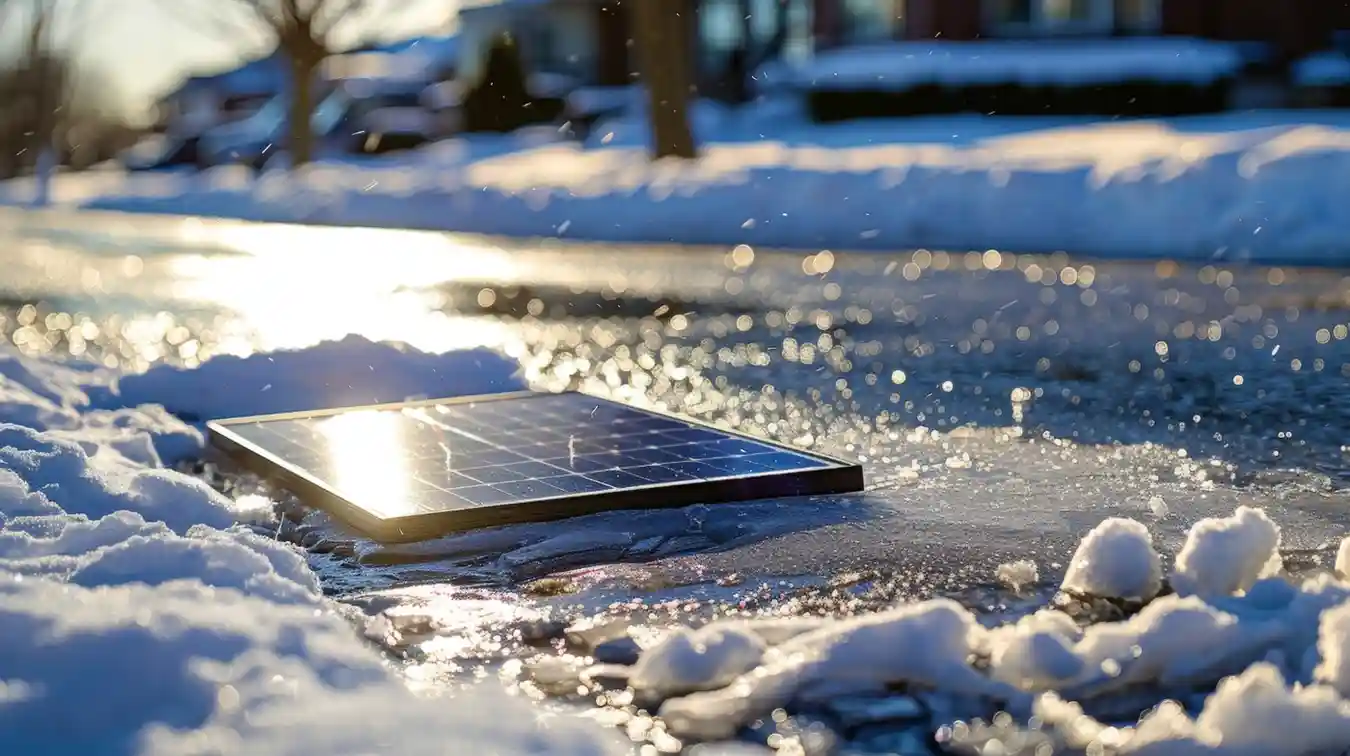
A light dusting usually slides right off, since panels are angled for exactly that reason. But wetter, heavier snow can sit for days, blocking production almost entirely until it clears on its own or you have it cleared.
Normal Aging (Degradation)
Every solar panel loses a small sliver of efficiency each year – around 0.5% on average. That doesn’t sound like much, but on a system that’s ten-plus years old, it adds up to a real, noticeable gap compared to day one. This is expected wear, not a defect, though it’s worth knowing your system’s rough output curve so you can tell the difference between normal aging and an actual problem. Research from NREL (the National Renewable Energy Laboratory) puts the median degradation rate for crystalline silicon panels at around 0.5% a year, which lines up with what we typically see in the field.
Or the System Was Undersized From Day One
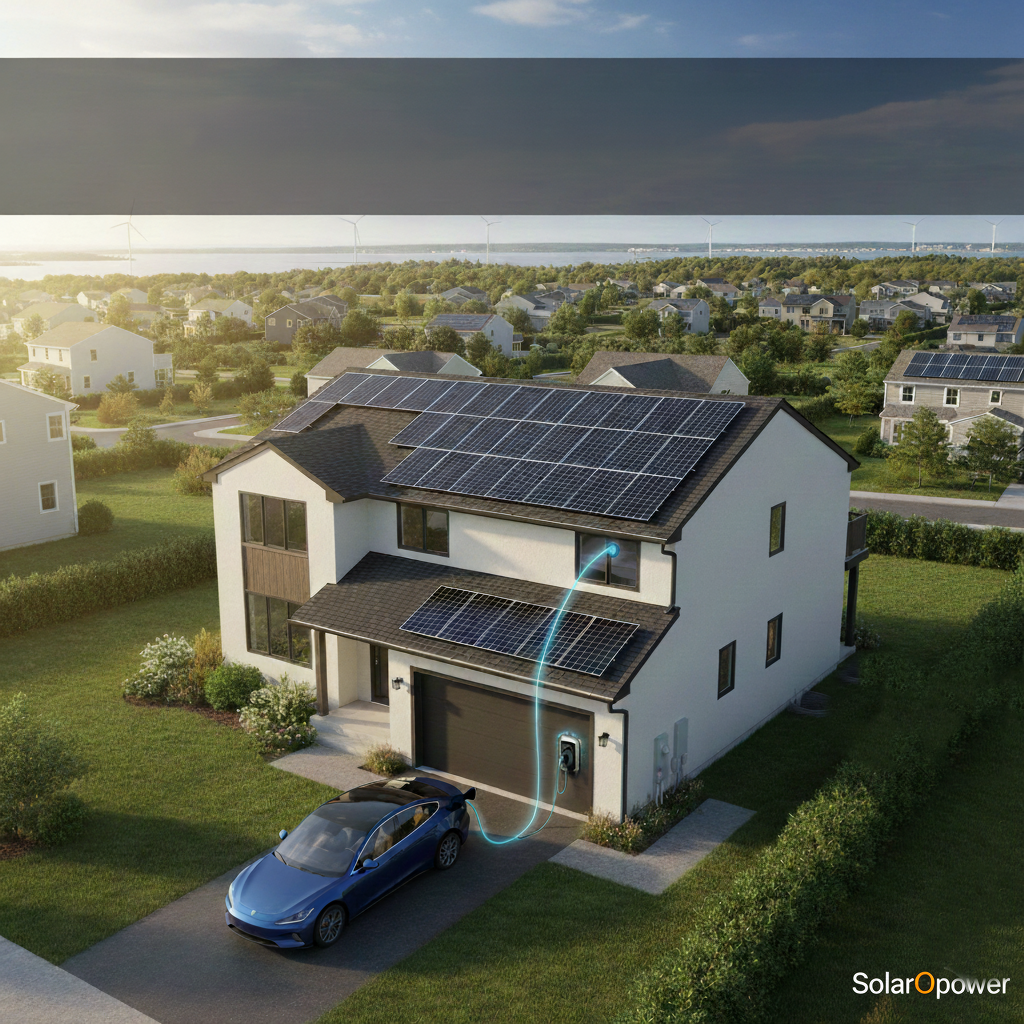
Sometimes what looks like a “drop” isn’t a drop at all – the system was sized for your household’s usage back when it was installed, and your usage has grown since then. A new EV in the driveway or an addition to the house can outpace a system that used to be plenty.
Solar Panels Not Producing Power Long Island? Call a Pro
If you’ve gone through the list above – checked for dirt, watched for shade, ruled out the season – and output’s still off, especially with error codes or a flat zero on the app, it’s time to bring in a licensed technician. That’s especially true if:
Your original installer isn’t around anymore
The system’s been in place 8-10 years or longer
The inverter’s throwing error codes
Not sure which one applies to you? SolarOPower can take a look. Whether your original installer is still around or not, our technicians can diagnose the issue and get your system back to full output. Schedule a solar inspection or call us at (516) 502-7060 – no runaround, just a straight answer on what’s going on with your system.
FAQ
How much should my solar output drop in winter?
Can I clean my own solar panels?
How do I know if it's the panels or the inverter?
Is a sudden drop an emergency?
Still Seeing Low Output After Checking All of This?
📞 Call (516) 502-7060
SolarOPower – licensed solar diagnostics and repair for Long Island homeowners, even if we didn’t install your original system.