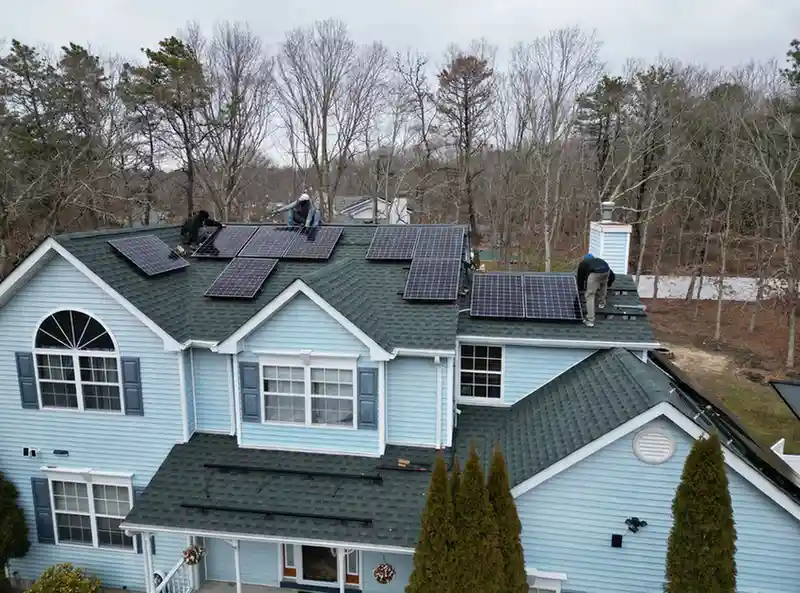
How much does commercial solar power actually cost for a business on Long Island?
Commercial solar power cost Long Island typically runs between $1.40 and $2.00 per watt before incentives, which usually works out to $140,000–$600,000 depending on system size. After the federal 30% tax credit and first-year bonus depreciation, many businesses recover close to half that cost in year one. Here’s exactly how the numbers break down, and what changes your final price.
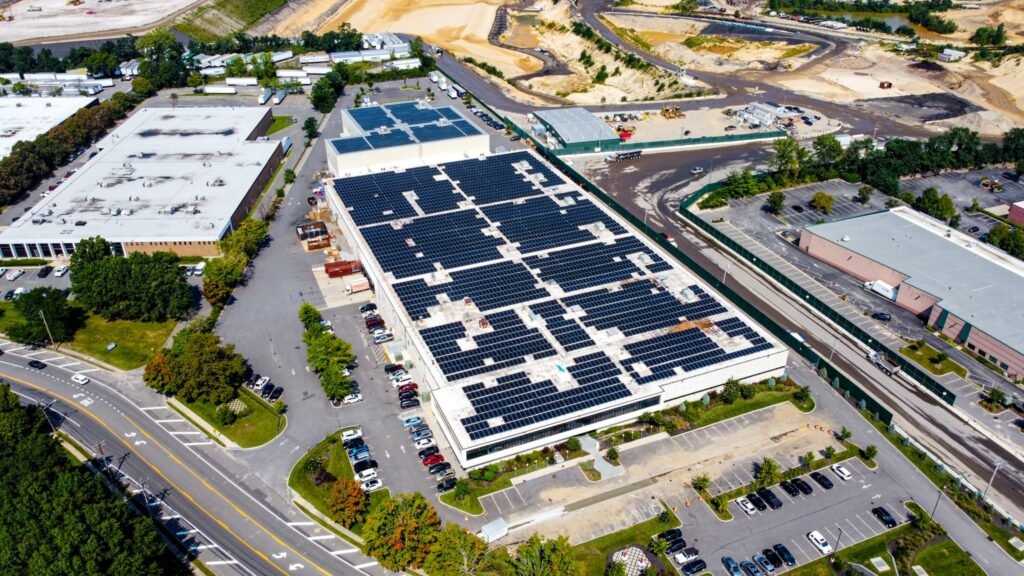
What Determines Commercial Solar Power Cost Long Island?
A commercial solar quote is never a flat number. Your price depends on:
System size (kW or MW): Bigger systems cost less per watt because fixed costs like permitting and engineering spread across more panels.
Mounting type: Rooftop, ground-mounted, or solar carport structures each carry different labor and material costs.
Roof condition and electrical scope:Older roofs or outdated electrical panels can add to the project cost.
Equipment tier: Panel and inverter brand, plus battery storage, changes pricing.
Interconnection requirements:Utility approval and grid connection work vary by location and system size.
Businesses in Nassau and Suffolk County work with PSEG Long Island for interconnection, which is a step every commercial solar installer needs to plan for early.
Average Commercial Solar Power Cost in Long Island: 2026 Breakdown
| System Size | Typical Use Case | Cost Per Watt (DC) | Estimated Total Cost |
|---|---|---|---|
| 25–100 kW | Small offices, retail stores | $1.80–$2.55/W | $45,000–$255,000 |
| 100–500 kW | Warehouses, factories, schools | $1.40–$1.90/W | $140,000–$950,000 |
| 500 kW–2 MW | Malls, logistics centers, large facilities | $1.10–$1.50/W | $550,000–$3,000,000 |
Source: NuWatt Energy commercial solar cost guide, updated July 2026)
Most Long Island businesses considering rooftop or carport solar for a single facility fall into the 25–500 kW range, so a realistic starting estimate is $45,000 to $950,000 before incentives, narrowing fast once you know your building’s actual energy use.
Common mistake to avoid: Comparing quotes only by total price instead of cost per watt. A $200,000 quote for a 150 kW system ($1.33/W) is a better deal than a $150,000 quote for a 90 kW system ($1.67/W), even though the second number looks smaller.
Federal and State Incentives That Lower Your Net Cost
This is where commercial solar pricing gets interesting, because the sticker price is rarely what a business actually pays.
1. Federal Investment Tax Credit (Section 48E) – 30%
Commercial solar projects can still claim a 30% federal tax credit on equipment and installation costs. Under the One Big Beautiful Bill Act (OBBBA), projects must either begin construction by July 4, 2026, or be placed in service by December 31, 2027, to qualify for the full credit. (Source: Greentech Renewables, March 2026)
2. 100% First-Year Bonus Depreciation
The OBBBA made 100% bonus depreciation permanent for qualifying property acquired after January 19, 2025. This replaced the old 5-year MACRS schedule, meaning a business can deduct the full depreciable cost of its solar system in the same year it’s installed, instead of spreading it over five years. (Source: Warren Averett, January 2026)
3. NY State Sales Tax Exemption
New York exempts the sale and installation of commercial solar equipment from state sales tax, and many counties extend this to local sales tax as well. (Source: NYSolarMap, 2026)
4. NY Real Property Tax Law Section 487
Qualifying solar installations are exempt from added property tax assessment for 15 years in most New York municipalities. Some towns have opted out, so it’s worth confirming with your local assessor before you plan around this. (Source: NYSERDA / RPTL §487)
When a business stacks the 30% federal credit with 100% bonus depreciation, industry estimates show the combined first-year tax benefit can offset roughly 45–50% of total project cost, assuming the business has enough tax liability to use the deductions. (Source: Green Mountain Solar, 2025)
Note: New York’s 25% state solar tax credit (up to $5,000) applies to personal income tax filings and is generally used for residential systems, not commercial entities. Talk to your accountant about which incentives your business structure qualifies for.
A Real Cost Example for a Long Island Business
To understand real commercial solar power cost Long Island businesses face, say a warehouse in Suffolk County installs a 150 kW rooftop system at $1.65 per watt:
Gross system cost: $247,500
Federal ITC (30%): –$74,250
Remaining depreciable basis after ITC adjustment: roughly $210,000
First-year bonus depreciation savings (at a 25% effective tax rate): approximately $52,500
Estimated net cost after year one: around $120,750
That’s about a 51% reduction from the sticker price, without counting NY sales tax savings or ongoing electricity bill reductions. Every business’s tax situation is different, so these numbers are a planning estimate, not a quote. Our commercial solar page has more on how we scope these projects for Long Island businesses.
How Long Does It Take to Break Even?
Payback period depends on your system size, local electricity rate, and how much of your own power you use versus sell back to the grid. Long Island businesses typically see commercial solar pay for itself faster than homeowners do, because businesses often use more electricity during daylight hours when panels produce the most power. For a full breakdown of how payback timelines work, see our guide on solar payback periods on Long Island.
What Else Affects Commercial Solar Power Cost Long IslandGround-mounted systems generally cost more per watt than rooftop systems because they need racking and land prep, but they make sense when roof space is limited.
Solar carports cost more upfront but double as covered parking, which some businesses value for that reason alone.
Battery storage adds to system cost but protects against outages, which matters for businesses that cannot afford downtime.
Larger systems reduce cost per watt, since design, permitting, and interconnection fees don’t scale up as fast as system size does.
How to Get an Accurate Quote for Your Business
Getting an accurate commercial solar power cost Long Island quote needs a site review of your roof or land space, your actual energy usage from past utility bills, and confirmation of your local utility’s interconnection rules.
Frequently Asked Questions
How much does a commercial solar system cost per watt in Long Island?
Is the 30% federal solar tax credit still available for businesses in 2026?
Can a business still use accelerated depreciation on solar in 2026?
Does New York charge sales tax on commercial solar equipment?
Will installing solar increase my commercial property taxes on Long Island?
How long does it take for a business to break even on commercial solar?
Does system size affect the price per watt?
Ready to see the exact commercial solar power cost Long Island would mean for your specific building?? Get a free commercial solar cost estimate. from SolarOPower, and our team will build a proposal based on your actual roof, energy use, and Long Island utility requirements