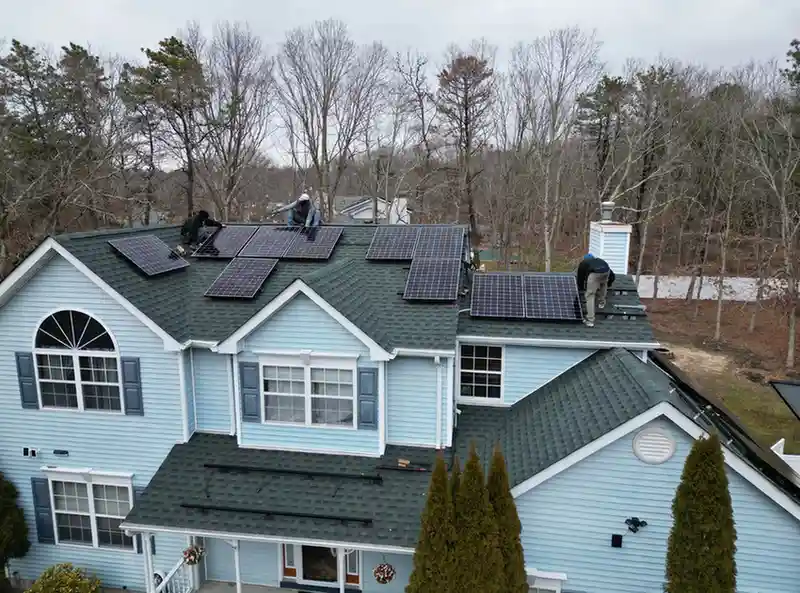
Do trees affect solar panels? It’s the first question we hear from homeowners in Huntington, Northport, and Great Neck – usually right after they look up at a 60-foot oak hanging over their roof and wonder if solar is even worth it for them. It’s a fair question, and honestly, it deserves a better answer than the generic “solar works anywhere!” you get from national blogs.
We’ve installed systems under some of the thickest tree canopy on the North Shore, and we’ve also talked a few homeowners out of solar when the shade genuinely didn’t pencil out. Here’s the honest version – what shade actually does to your production, what you can legally do about troublesome trees on Long Island, and when trimming makes sense.
Do Trees Affect Solar Panels? The Short Answer
Yes, they do – and more than most people expect. Tree shade can cut a solar system’s output by anywhere from 20% to 80% depending on how much of the roof it covers and when it hits. Solar panels need sunlight, and even a single shaded section of a panel can drag down the performance of everything wired to it.
But here’s the part the short answer leaves out: shade is a design problem, not a dealbreaker. Between microinverters, smart panel placement, and selective tree trimming, most shaded Long Island homes can still produce 75–90% of what an open roof would – and that’s usually more than enough to make solar pay for itself.
How Tree Shade Actually Hurts Solar Output
To understand why one branch can cause so much trouble, you need to know how panels are wired. Most solar panels are made of cells connected in series – think of water flowing through a pipe. Shade one cell, and it’s like putting a kink in that pipe: the whole string slows down, not just the shaded spot.
This is why a branch covering 10% of a panel can slash its output by 50% or more. The shade doesn’t block 10% of the electricity. It blocks the pathway.
Three things make tree shading solar panels especially tricky:
- Shade moves. That maple on the east side of your house throws a shadow that sweeps across your roof all morning. It’s not one shaded panel – it’s a rolling blackout across the whole array.
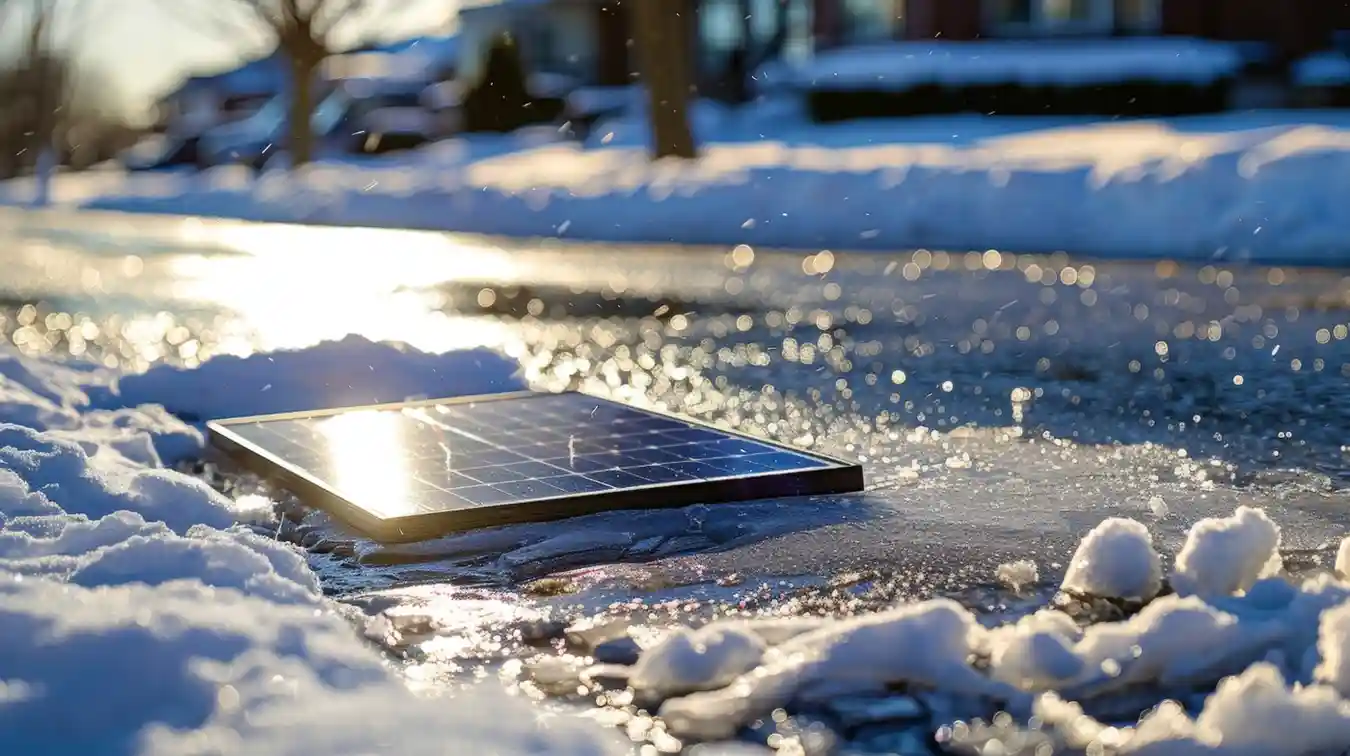
- Winter is worse than summer. The sun sits low over Long Island in December – barely clearing the rooftops at midday. A tree that doesn’t touch your panels in July can cast a long, panel-covering shadow in winter, exactly when your system can least afford the loss.
- Bare branches still block light. Homeowners often assume their oaks “don’t count” once the leaves drop. Leafless trees throw softer shade, but they still cut production meaningfully – especially in winter when the sun angle is low.
Why North Shore Long Island Homes Feel This More
Long Island’s North Shore is one of the most tree-dense solar markets in New York. The mature oak and maple canopy that makes places like Stony Brook, Manhasset, and Glen Cove beautiful is the same canopy that covers roofs. Add smaller lots and houses built close together, and shade becomes the rule, not the exception – especially compared to the wide-open south shore.
If that’s your street, don’t assume you’re out of luck. We’ve put profitable systems on heavily wooded properties in Huntington and Oyster Bay. It just takes a design that works with the trees instead of pretending they don’t exist.
Solar Panel Shading Solutions That Actually Work
Microinverters and power optimizers
This is the single biggest fix. Traditional systems use one string inverter – which means your whole array performs only as well as its worst panel. Microinverters sit under each individual panel and let every panel do its own thing. One panel dips into shade, the other twenty keep producing at full power.
On a tree-heavy lot, going panel-level often recovers 15–30% of the production a string system would lose. We break down the full trade-offs in our string inverter vs. microinverter comparison.
Shade-tolerant panel choices
Not all panels handle partial shade the same way. Modern half-cut cell panels split the panel into two independent halves, so shade that knocks out the top half leaves the bottom half producing. Higher-efficiency panels also squeeze more out of weak, filtered light – which matters when you’re working with less sun to begin with.
Smarter panel placement
Sometimes the answer isn’t equipment – it’s geometry. The money hours for solar are roughly 9 a.m. to 3 p.m. If the east roof is shaded all morning but the west face gets clean sun from noon onward, we simply put the array where the sun actually lands. On some homes, splitting panels across two roof faces beats cramming everything onto one shaded side.
Tree Trimming for Solar Panels: What You Can Legally Do on Long Island
Trimming your own trees
Your trees, your call – with two caveats. First, hire a licensed arborist rather than topping the tree yourself. Crown thinning or raising the canopy on one or two key trees can open up your solar window for years, and a typical residential trim on Long Island runs roughly $300–$1,000 depending on size. Second, check your village or town first – some municipalities have rules about how much of a mature tree you can cut.
When your neighbor’s tree is the problem
This one comes up constantly. Under New York law, you generally may trim branches that cross onto your property – but only up to the property line, and you can’t do anything that damages the overall health of the tree. You can’t walk onto their yard and cut, and you can’t force them to remove a healthy tree.
The practical path is usually a conversation plus a written solar easement – a recorded agreement where your neighbor agrees to keep their tree trimmed to a certain height. It sounds formal, but it’s far cheaper than litigation and keeps things friendly.
Village permits and protected trees
Several Long Island towns – Huntington and North Hempstead among them – require permits before removing or sometimes significantly pruning certain trees, especially mature or “specimen” trees. Fines for unpermitted removal can run into the thousands. A quick call to your village building department before cutting saves a world of headaches.
Trees near power lines – don’t touch
If the problem branches are anywhere near PSEG Long Island lines, stop. Utility line clearance is handled by PSEG’s vegetation management crews, and homeowners are not permitted to trim there themselves. Call them; they’ll schedule the work.
Trim the Trees or Skip Solar? The Real Numbers
Let’s put honest numbers on it. A fully sunny Long Island roof typically offsets 95–100% of a home’s electric bill. The same house with moderate tree shade – but designed with microinverters and smart placement – typically lands in the 75–90% range. What does that do to your payback?
- Unshaded roof: payback in roughly 6–7 years
- Moderately shaded, well-designed: roughly 7–9 years
- Heavy all-day shade: payback stretches past 10 years – at that point we’ll tell you straight that solar may not be your best move
With Long Island’s electric rates among the highest in the country, even a shaded system usually beats the utility. But if your main roof faces sit in shade from 9 to 3, year-round, no amount of trimming fixes the math – and a reputable installer should say so.
Get a Free Shade Assessment Before You Decide Anything
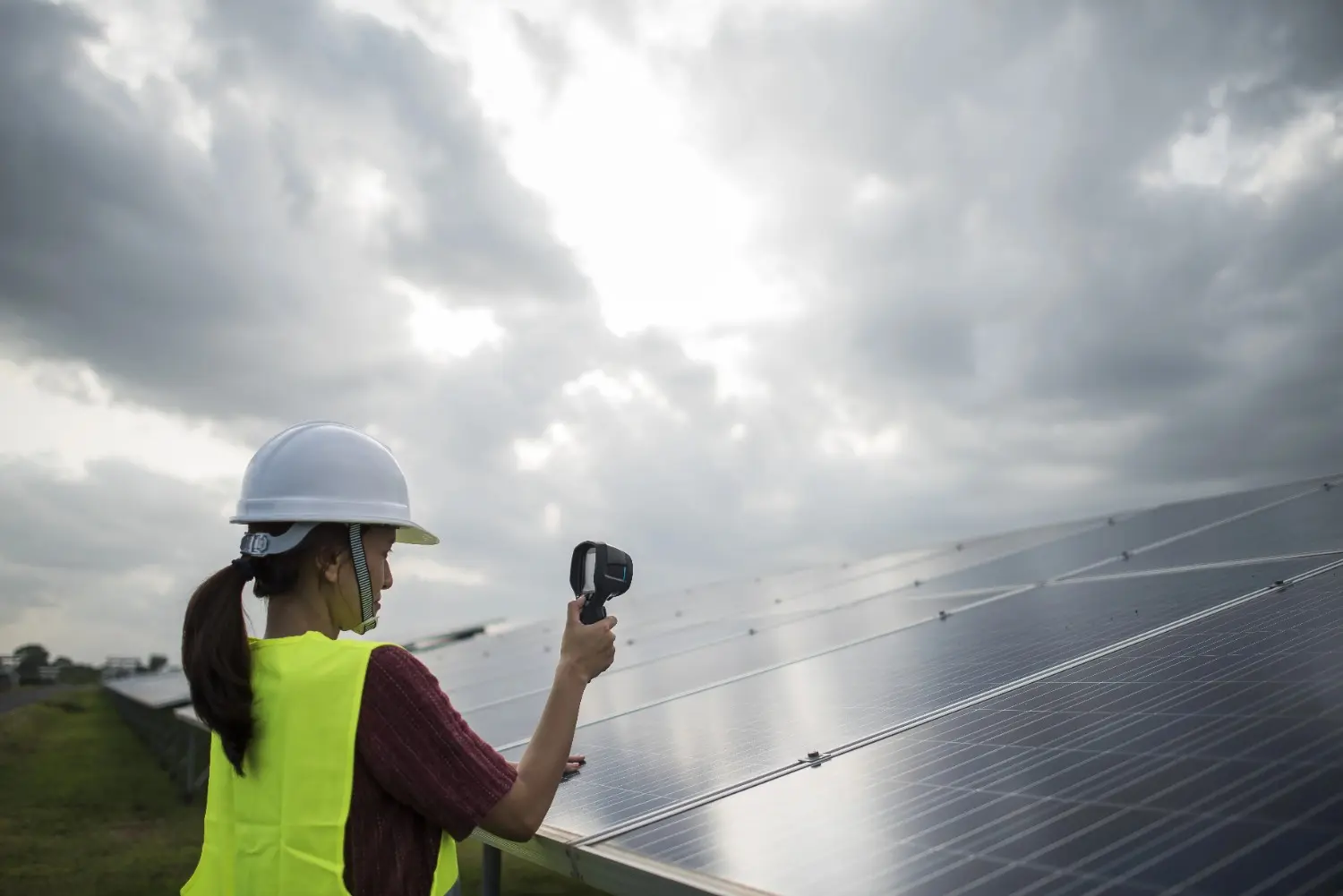
Don’t guess, and don’t take a national blog’s word for it – including this one. We run a professional shade analysis on your exact roof using satellite imagery and 12-month sun-path modeling, then show you panel-by-panel production estimates before you spend a dollar. If trees are a problem, we’ll show you exactly which branch, on which tree, is costing you what – and whether trimming, equipment, or layout solves it.
Request your free shade assessment and we’ll give you a straight answer within a couple of days.