Should You Combine Roof Replacement and Solar Installation on Long Island?
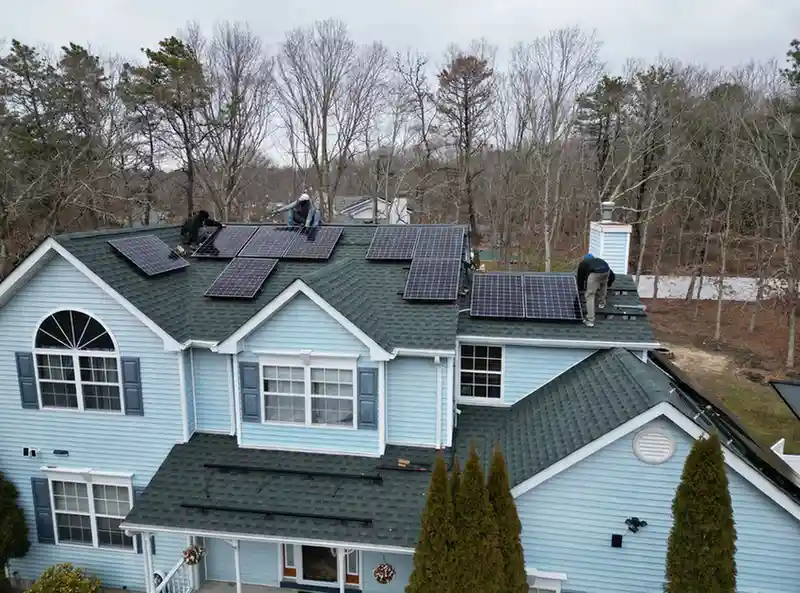
If your roof is getting old and you are also thinking about going solar, you are facing two big home decisions at the same time. The question homeowners across Nassau and Suffolk County keep asking is simple: should you replace the roof and install solar panels together, or handle them separately?
The short answer is that it depends on your roof’s age. Here is how to think it through.
Getting roof replacement and solar right the first time saves you from paying for the same job twice down the road.
Why Roof Age Matters Before Going Solar
Solar panels are built to last 25 to 30 years. A standard asphalt shingle roof lasts about 20 to 30 years. Cheaper three-tab shingles often wear out closer to 20. That gap matters more than most homeowners realize.
If you install solar panels on a roof that only has 5 or 10 years of life left, you will almost certainly need to remove those panels later. The roof gets replaced, and then the panels go back on. That removal and reinstallation process, often called R&R, typically costs $1,500 to $6,000 depending on your system size. It is an avoidable expense if you plan ahead.
If you already have solar installed and your roof is nearing the end of its life, see our guide on solar panel removal and reinstallation for what that process actually involves and what it costs.
A good rule of thumb: if your roof is more than 15 years old, get it inspected before committing to solar. If it is under 10 years old and in solid condition, there is usually no reason to replace it just to add panels.
The Real Cost Savings of Combining Roof Replacement with Solar
The National Renewable Energy Laboratory has studied this exact tradeoff. Installing a new roof and a solar system separately costs about $5,000 more on average than doing both as a single project. That is the core financial case for roof replacement and solar being handled together instead of as two jobs.
Combining roof replacement and solar installation lets you share labor, scaffolding, permitting, and site visits between both jobs. Sharing those costs is what lowers the total price.
There are practical reasons behind these savings too. Roofers and solar installers who work together can schedule one crew instead of two. Permits often get filed as a single package instead of two separate applications with the Town of Hempstead, Town of Islip, or your local building department. You also avoid paying twice for the labor of accessing your roof.
On top of the upfront savings, bundling protects you from the future cost of an emergency R&R. That is the expense you would face if your existing roof failed under a working solar array.
When Bundling Makes Sense, and When It Does Not
Combining roof replacement and solar is the smart move if any of these apply to your home:
Your roof is 15 years or older and showing wear such as curling shingles, granule loss, or past leaks.
You already need roof repairs before an installer will approve solar.
You want to lock in one financing package instead of managing two separate projects.
You are also considering a metal roof, which pairs well with solar and can last 40 to 70 years.
On the other hand, bundling does not make sense if your roof is newer or was recently replaced. In that case, adding solar now is the better move. You can plan for a routine reinstallation decades from now instead. Replacing a perfectly good roof just to add panels wastes money you could put toward the solar system itself.
What Long Island Homeowners Should Ask Their Installer
Before signing a contract for a combined project, ask your solar installer these questions:
Will the roofing crew and solar crew coordinate on scheduling, or will this be two separate visits?
What warranty applies if a roof leak develops after solar is installed, and who is responsible for it?
Does the quote separate roofing costs from solar costs, so you can see where the savings actually come from?
How does salt air exposure near the South Shore affect the roofing materials you recommend?
A reputable Long Island solar and roofing contractor should walk you through your roof’s condition honestly. They should never push a bundle you do not need.
Incentives to Factor In
New York homeowners can claim the state Solar Energy System Equipment Credit through the Department of Taxation and Finance. It has historically covered 25 percent of solar costs up to $5,000. Program details and caps can change from year to year. Confirm the current amount with your installer or the state’s official site before you budget your project.
Note that roof replacement costs on their own typically do not qualify for solar tax credits. Only the portion of the project directly tied to the solar equipment is eligible.
Frequently Asked Questions
Does a new roof qualify for the solar tax credit?
How much does it cost to remove and reinstall solar panels for a roof replacement?
Is it worth replacing my roof before installing solar panels?
Ready to find out whether bundling makes sense for your Long Island home? SolarOPower can inspect your roof and give you an honest, itemized quote for solar, roofing, or both.