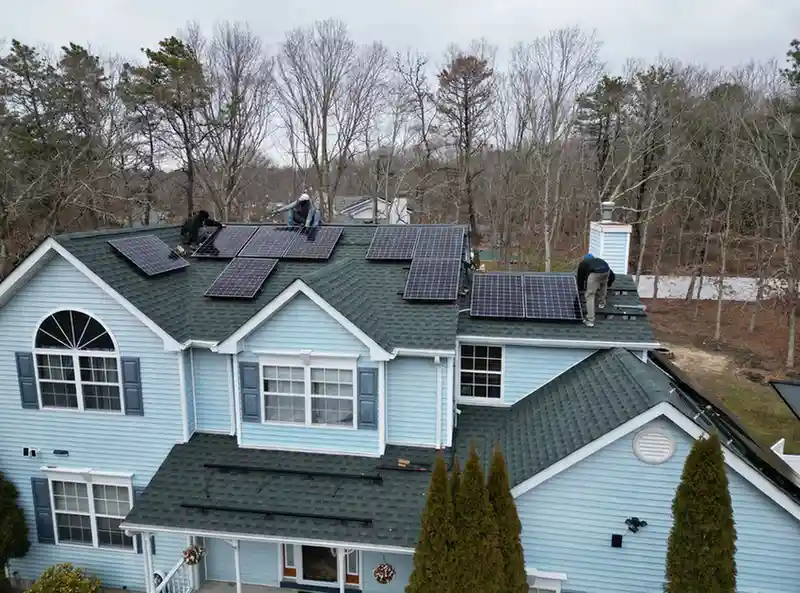
When Long Island homeowners research solar panel orientation Long Island roofs can support, the first question is almost always the same: does my roof face the right direction? The honest answer is that south-facing roofs produce the most annual energy on Long Island, but west and east orientations still generate 75-85% of a south roof’s output – and in some cases, west-facing panels can actually save you more money during peak-rate hours.
This guide breaks down exactly how roof direction affects solar production in Long Island NY, which orientation is best for your specific electricity usage pattern, and how SolarOPower’s system designers evaluate your roof during a free site assessment.
This guide breaks down exactly how roof direction affects solar production in Long Island NY, which orientation is best for your specific electricity usage pattern, and how SolarOPower’s system designers evaluate your roof during a free site assessment.
Why Solar Panel Orientation Matters in Long Island
Long Island sits at approximately 40.7° north latitude – which means the sun travels across the southern sky throughout the year. Solar panels oriented directly south (azimuth 180°) capture the maximum sunlight between 10 AM and 2 PM, when solar radiation is strongest. A properly oriented south-facing roof on Long Island can produce 10,000-11,500 kWh per year from an 8 kW system – enough to offset 90-100% of an average Long Island home’s electricity usage.
But orientation is only one piece of the puzzle. Production also depends on roof pitch (angle), shading from trees and neighboring buildings, and your home’s specific electricity usage pattern. A south-facing roof with heavy tree shade will underperform compared to an unshaded west-facing roof. This is why SolarOPower conducts a free on-site assessment using Aurora Solar software before recommending system size and orientation.
South-Facing Solar Panels: The Long Island Standard
South-facing solar panels are the gold standard on Long Island and across the northern hemisphere. They capture maximum sunlight throughout the day, especially during peak sun hours between 10 AM and 2 PM. For Long Island homeowners with a south-facing roof (azimuth 180°), an 8 kW solar system typically generates:
10,000-11,500 kWh per year (unshaded)
90-100% offset of average Long Island electricity usage
25-year total savings of $42,000-$52,000
South-facing panels are ideal for homeowners who are home during the day, run air conditioning heavily in summer afternoons, and want maximum production from a smaller roof area. The downside: south-facing panels produce most of their energy midday, when PSEG Long Island’s residential rates are lower than peak evening hours.
West-Facing Solar Panels: Peak-Rate Savers
West-facing solar panels (azimuth 270°) on Long Island typically produce 75-85% of a south-facing system’s annual output – but the energy comes during late afternoon and evening hours, when PSEG Long Island’s residential rates are highest. For homeowners on time-of-use billing or those considering battery storage, west-facing panels can actually save more money per kWh than south-facing panels.
Key advantages of west-facing solar in Long Island:
Production peaks 2 PM to 7 PM (during peak-rate hours)
Better alignment with household energy usage (AC, cooking, laundry)
Pairs perfectly with Tesla Powerwall battery storage
Reduces grid demand during peak hours – environmental benefit
Ideal for homeowners who work from home or return home by 4 PM
A typical 8 kW west-facing system on Long Island generates 8,000-9,500 kWh per year – still enough to offset 70-85% of an average home’s electricity usage, with most of that energy coming exactly when you need it most.
East-Facing Solar Panels: Morning Energy Producers
East-facing solar panels (azimuth 90°) on Long Island produce 70-80% of a south-facing system’s annual output, with most energy coming between 6 AM and 12 PM. East-facing roofs are ideal for Long Island homeowners who:
Use significant morning energy (electric water heater, EV charging overnight, morning AC)
Work from home and need daytime power
Have a west-facing roof that is heavily shaded in afternoon
Want to pair with battery storage charged by morning sun
East-facing panels are particularly effective when combined with a Tesla Powerwall – the morning sun charges the battery, which then powers the home through evening peak hours. A typical 8 kW east-facing system on Long Island generates 7,500-9,000 kWh per year.
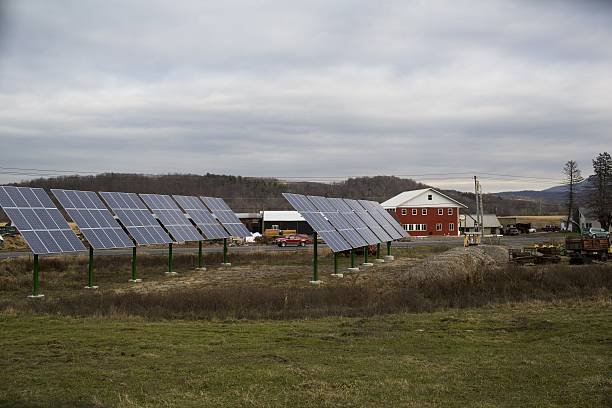
North-Facing Roofs: Can You Still Go Solar?
North-facing roofs (azimuth 0°) on Long Island are the least ideal orientation for solar panels, producing only 50-65% of a south-facing system’s annual output. However, north-facing solar can still make financial sense if:
Your roof pitch is shallow (less than 20°)
You have a large roof area available
Your south/west/east roof is heavily shaded
You want to maximize environmental impact regardless of payback
SolarOPower has installed successful north-facing solar systems on Long Island when paired with battery storage and energy-efficient appliances. We will be transparent with you: if your only available roof faces north and is steeply pitched, we may recommend waiting or considering ground-mount solar instead.
Roof Pitch (Tilt Angle) and Orientation: The Complete Equation
Roof orientation (azimuth) and roof pitch (tilt angle) work together to determine solar production. On Long Island, the optimal solar panel tilt is approximately 35-40° from horizontal – which matches most Long Island roof pitches (4:12 to 8:12). Flatter roofs (3:12 pitch or less) benefit from mounting systems that tilt panels up to 30° for better production.
SolarOPower’s Aurora Solar design software calculates production based on:
Roof azimuth (south, west, east, north or combination)
Roof pitch (tilt angle)
Shading patterns across all four seasons
Roof area available
Panel brand and efficiency
Inverter type (string vs microinverter)
A free site assessment from SolarOPower includes all of these calculations, with a written production estimate and 25-year savings projection – typically delivered within 3-5 business days.
How SolarOPower Evaluates Your Long Island Roof
Our free roof assessment includes:
1. Roof orientation analysis using Aurora Solar software
2. Shading study across all four seasons (includes tree growth projection)
3. Structural inspection (roof age, rafters, weight capacity)
4. Electrical panel evaluation (100A vs 200A upgrade needs)
5. 12-month utility bill analysis (PSEG Long Island)
6. Production estimate (25-year warranty period)
7. Federal tax credit + NYSERDA rebate paperwork preparation
Every Long Island solar assessment is conducted by a SolarOPower project manager never a salesperson. We are paid the same regardless of system size, so we recommend only what makes financial sense for your home. Some roofs should not have solar – and we will tell you that honestly.
Frequently Asked Questions
My roof faces west. Is solar still worth it on Long Island?
Can I install solar panels on multiple roof orientations?
What if my roof faces north?
Does roof pitch affect solar production?
How much does a shading tree affect my solar production?
I have a flat roof. Can I still get solar on Long Island?
Can I add panels later if my orientation is not ideal?
Ready to Find Out If Your Roof Is Solar-Ready?
Get a free, no-pressure roof assessment from SolarOPower. Our project managers will analyze your roof orientation, shading, pitch, and structural capacity – then show you exactly how much energy your specific roof can generate. No sales tactics, no vague estimates, just real numbers from local Long Island solar experts.